 aradeal

We run every part of cash on delivery.
You run the ads.
Two warehouses in Saudi Arabia, a call centre, the carriers and the settlement. You bring an audience, and we do the rest of it.
No stock purchase
You never buy the stock.
Sixty units bought up front is sixty units of your money standing still. Here, taking a product on costs nothing, and the per-unit cost only ever appears once the order has delivered.
SellerProduct · ProductMarket.cost
The catalogue
700+
products in our warehouses today
Add one, and you can be sending traffic at it within the hour.
They are already received, labelled and counted against their SKU. No minimum, no container, no money down on stock that might not move. If what you want is not there, we source it and it becomes a catalogue product like any other.
Product · SellerProduct · SourcingRequest
The division of labour
Two jobs are yours.
Fourteen are ours.
Your list finishes almost before it starts. Ours keeps going for another twelve items, and every one of them is a status, a fee line or a relation the system actually records.
LeadStatus · OrderStatus · FeeSettings · CountryFee
What comes with the product
The ads are already made.
Landing pages and ad creatives belong to the product, not to whoever is selling it — so whatever a product already has comes with it when you take it on. You point your traffic at them.
LandingPage · AdCreative (video, image)
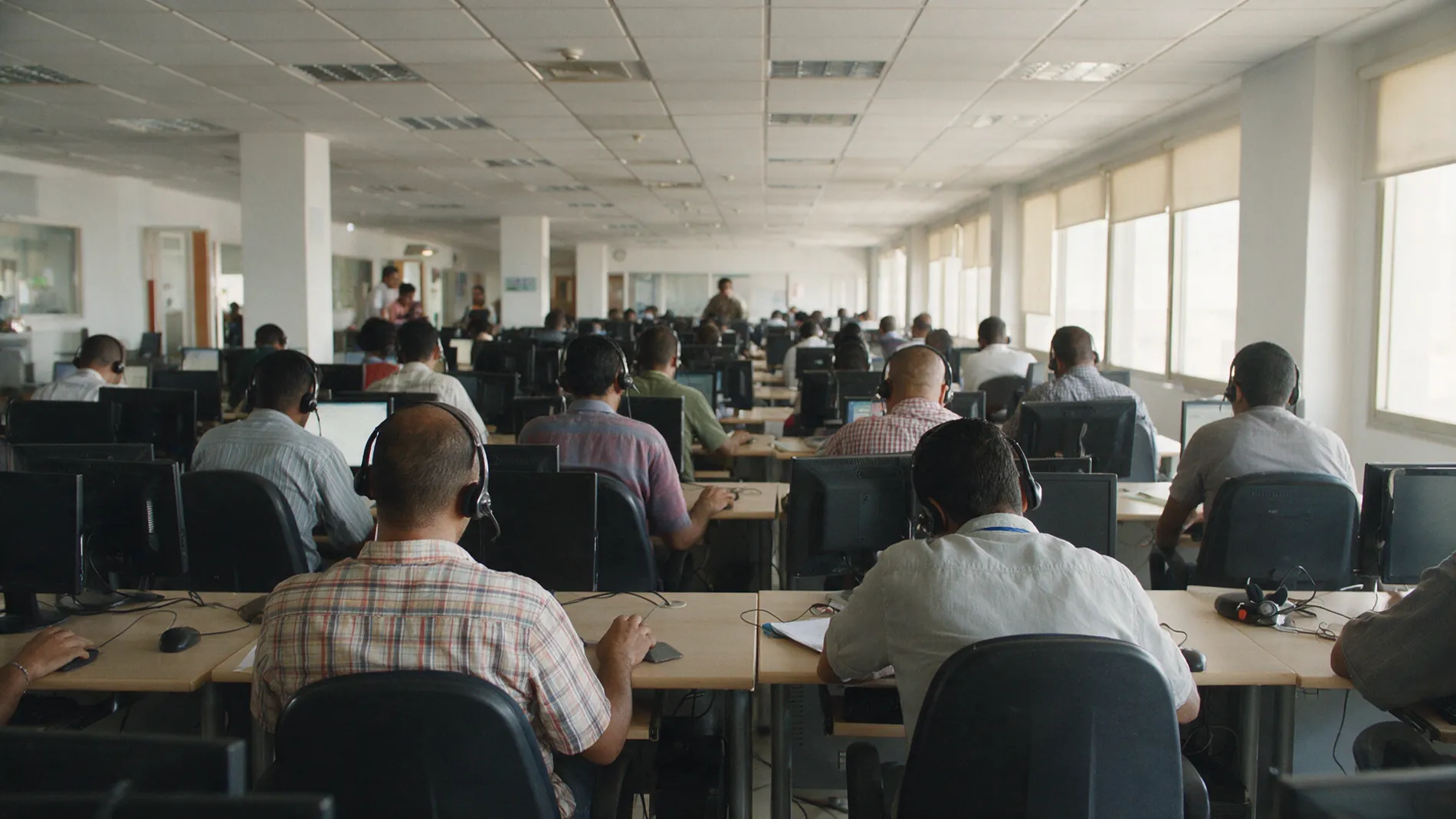
The call centre
We call every lead until it answers.
New, called, no answer, callback, confirmed. Two of those five are failures, and they are on the record with the rest — the attempt count, the outcome and the agent's note all sit on the lead, so a no answer at nine becomes a callback at eleven instead of a lost sale.
Lead.attempts · .status · .note · .lastOutcomeAt
On the same call
The order grew.
You weren't on the call.
One prayer mat became three while the agent was already on the phone. The upsell is charged at a dollar, once.
Lead L-4473 · LeadLine.isUpsell · FeeSettings.callCenterUpsell

We hold and pack it
Your stock sits in our buildings, counted.
Goods in are labelled on receipt and held against your name. Fifteen cents a unit to label, ten cents a month to hold, fifty cents to pick and pack an order — and the order is picked from whichever building is closest to the customer who placed it.
FeeSettings.labeling · .storage · .fulfillment
Two buildings, two markets
The parcel leaves from the nearer building, with a carrier that serves that market.
Both buildings are in Saudi Arabia — Jeddah and Riyadh — so a Riyadh order is not shipped the width of the country, and Aramex carries the UAE orders across. You never open an account with either carrier.
Four routes, which is every route the system actually has. SMSA Express stays inside Saudi Arabia; Aramex is the one that crosses. We hold both accounts, so you never open one.

We deliver and collect
The money changes hands at the door.
The order leaves with a tracking number that is a link on your own order, and the customer pays the courier. You are not phoning the carrier and you are not chasing the cash.
Delivered and returned are both states on the order, and both have a price. In Saudi Arabia a delivery is $4.99 and a return is $2.99, and you see both before you take a product on. A refused parcel is a line you can see, not a silence you find at the end of the month.
OrderStatus · CountryFee.delivered · .returned
You get paid
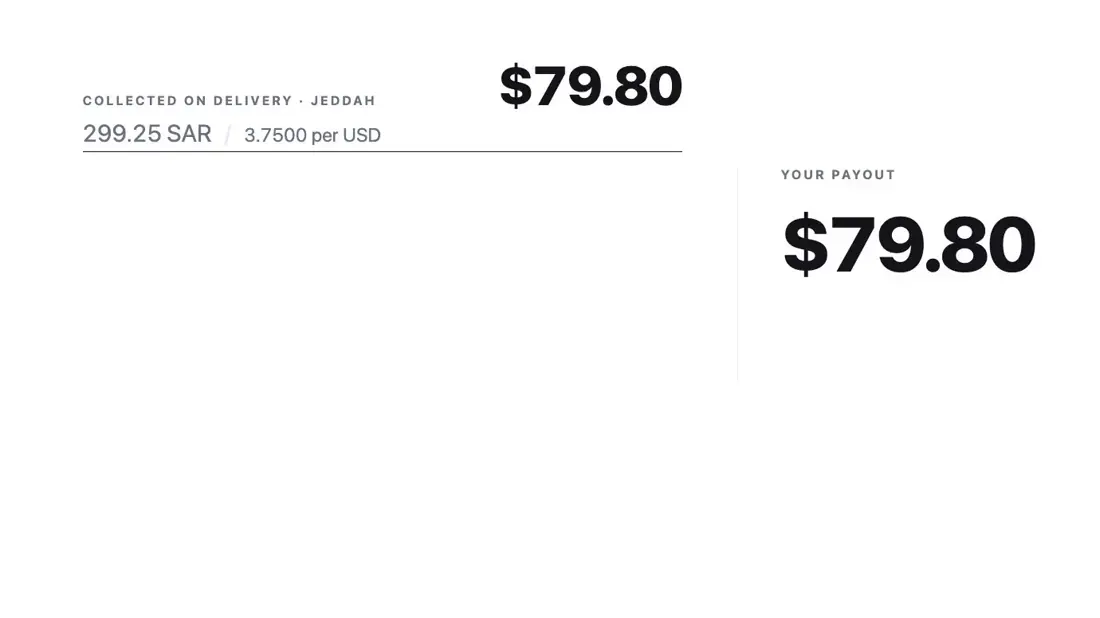
One order, itemised to the cent.
Collected in riyals at the door, converted at the rate the statement freezes when it is issued, then nine deductions you were shown before you ever took the product on. Scroll, and watch it settle.
$79.80 − $59.28 = $20.52 · every rate from FeeSettings
There is no sign-up button
Tell us what you sell.
A person reads it.
A warehouse slot and a place in the call-centre queue are real things that get allocated to somebody, so an application is read rather than processed. Approved applications become a seller account. The rest get a reason.
What the application asks
- Your business, and whether you trade as a company or on your own account.
- Where you are, and which of our markets you want to sell into.
- Your store, if you have one, and roughly how many orders a month you do now.
- Where your traffic comes from.
- An identity document, read only by the person reviewing it.